

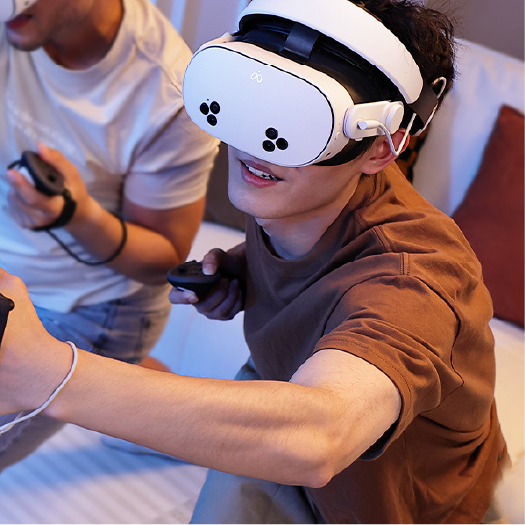

When virtual reality hardware induces physical fatigue, users frequently default to adjusting arbitrary strap parameters without identifying the underlying mechanical factors. If your headset requires manual repositioning during active sessions, or if you experience localized tension post-session, evaluating the ergonomics of your current configuration can provide a permanent solution.
Instead of guessing, take three minutes to execute this self-diagnostic checklist. By identifying how different structural designs interact with your cranial anatomy, you can transition from temporary adjustments to a more stable ergonomic framework.
---
The "Red Forehead" & Nasal Bridge Compression
The Presentation: Upon removing the headset, deep red indentations are highly visible across your forehead and the bridge of your nose. You experience a dull, localized ache along your brow ridge during extended deployment.
The Mechanical Cause: This is typically driven by high horizontal over-tensioning. Standard flexible cloth bands excel at keeping a headset lightweight and packable, but due to their pliable nature, they manage a larger portion of the headset's forward weight through horizontal tension. To counteract the forward torque of the display housing, users often tighten the strap horizontally, which can inadvertently increase pressure on the facial plane and sensitive frontal nerves.
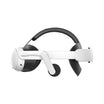
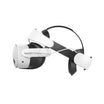
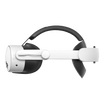
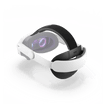
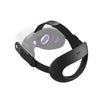
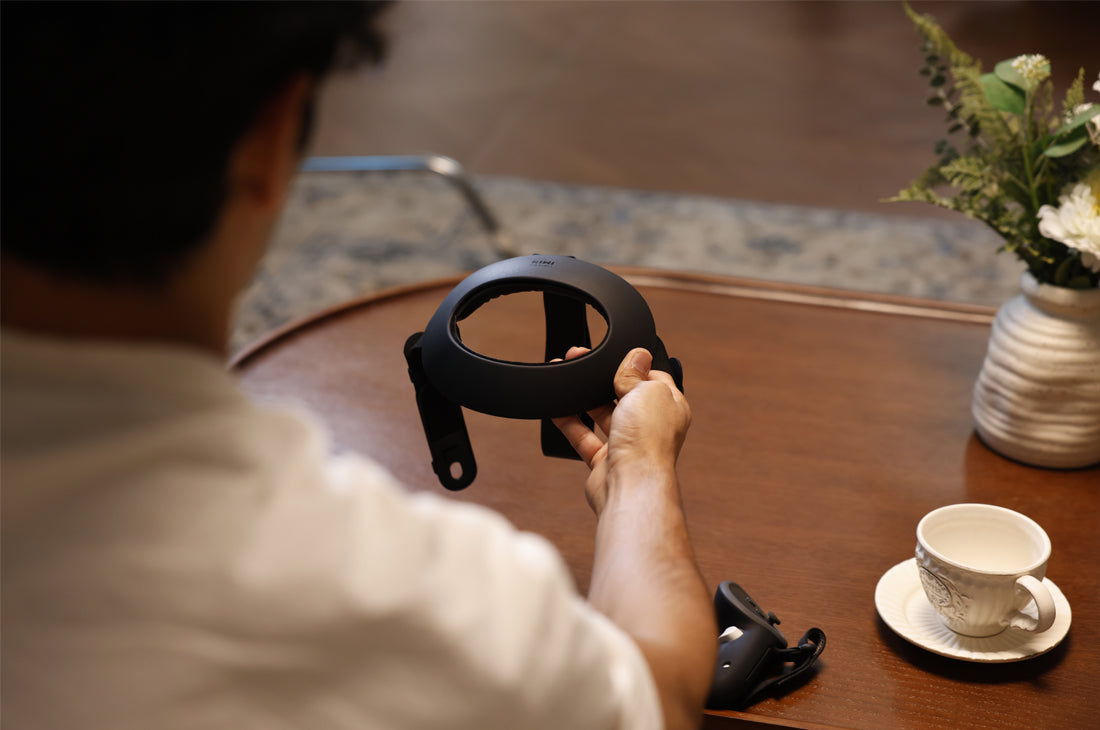
If your primary use case demands long-term pressure relief over raw compressibility, distributing the load vertically is highly effective. An engineered upgrade path, such as the rigid KIWI design K4 Flex Head Strap, utilizes an expanded occipital cradle. By cupping the rear base of the skull, the rigid frame transfers a significant portion of the front-heavy display load away from the face and redistributes it onto the sturdy cranial vault.
The "Sweet Spot Slip" During Active Rotation
The Presentation: Visuals are perfectly sharp when you stand still, but during rapid lateral head movements (e.g., evasion maneuvers in simulation or rhythm gaming), the display blurs. You find yourself manually readjusting the front of the headset to realign the lenses with your pupils.
The Mechanical Cause: This dislocation is a multi-factored kinetic failure driven by a combination of headset inertia, an inherently front-heavy design, and insufficient structural friction. Because the headset’s center of gravity is positioned far forward, any rapid rotational movement generates substantial kinetic momentum. While flexible fabric straps accommodate various head shapes comfortably, they rely heavily on surface friction against the hair to stabilize this forward weight. When rapid head rotation occurs, that momentum easily overcomes the cloth's friction coefficient, allowing the front-heavy display housing to slip downward and pull the lenses out of your optical sweet spot.
For intense, movement-heavy applications, stabilization requires a non-elastic mechanical connection between the display and the rear support. Utilizing a rigid polymer arm framework establishes a fixed structural link. The structural composite material used in rigid side straps minimizes vertical sag, maintaining consistent lens-to-pupil centering regardless of rotational velocity.
The Multi-User Calibration Interruption
The Presentation: Multiple members of your family or development team share a single headset. Every transition requires manually unfastening, repositioning, and refastening fabric hook-and-loop tabs—a process that can make it tedious to quickly replicate an individual's custom fit parameters.
The Mechanical Cause: Fabric setups rely on manual tactile estimation. Repeating the adjustment loop frequently can accelerate material wear on the fasteners over long timelines, making fast, highly repeatable calibration more difficult during rapid user turnarounds.
Multi-user environments benefit substantially from mechanical calibration systems. Rigid straps utilize a rear rotational gear dial, enabling users to find and duplicate their precise tension level in seconds via incremental clicks. Additionally, selecting hardware integrated with a 52° flip hinge—such as the K4 Flex replacement setup—allows users to lift the display out of view instantly to check their environment without disturbing the underlying fit settings.
---
Evaluating Material Science in Rigid Straps
While understanding these structural profiles clarifies the specific benefits of rigid solutions, selecting the right mechanical strap requires analyzing its material composition. Unoptimized plastics can become brittle under repetitive twisting stress, introducing structural vulnerabilities under heavy use.
The architecture of the KIWI design K4 Flex is developed specifically to address these material limitations. Its side straps utilize an eco-friendly polymer composite matrix capable of withstanding over 10,000 continuous 180-degree bends in environmental stress-testing without showing microscopic stress lines or physical fatigue. This ensures that the rigid stabilization framework doesn't degrade, keeping your headset balanced, your visuals aligned, and your face free from unnecessary compression during long-term deployment.
A Balanced Assessment: Acknowledging the Trade-offs
To maintain objective accuracy, it is critical to recognize that rigid mechanical straps are not a universal default for every operational context. Compared to minimalist elastic cloth bands, upgraded rigid structures introduce a few distinct engineering trade-offs:
- Increased Static Weight: The integration of polymer side arms, mechanical rotational dials, and structural padding adding more total weight to the headset ecosystem than a simple strip of fabric.
- Thermal Retention Around Cushions: The expanded surface area of the rear PU leather cushions provides superior pressure distribution, but it also traps more localized body heat, running noticeably warmer during high-intensity fitness or rhythm gaming sessions.
- Reduced Short-Session Velocity: For ultra-short, 2-minute sessions—such as quickly putting on the headset to check a desktop notification or testing a single line of code—a mechanical dial system requires more deliberate setup steps than slipping into a flexible, low-profile fabric band.
Conclusion: Aligning Design with Intended Use
Ultimately, there is no universal standard for head strap architecture; there is only the right tool for your specific application. While flexible fabric bands remain an excellent choice for users prioritizing lightweight portability or casual, low-intensity sessions, rigid systems are engineered for sustained stability. Transitioning to a rigid mechanical support system like the KIWI design K4 Flex establishes a balanced structural foundation—securing the visual sweet spot and ensuring comfort scales alongside your time in virtual reality.


Commenta
Nota che i commenti devono essere approvati prima di essere pubblicati.
Questo sito è protetto da hCaptcha e applica le Norme sulla privacy e i Termini di servizio di hCaptcha.